
In this article
TapTap Maker’s public presentation includes both conversational creation and a local MCP workflow. That combination changes the useful question for a prospective creator: how does the tool fit into a project they can continue maintaining?
What the interview says
In 36Kr Games’ August 13 ChinaJoy interview, product lead Zhao Tianyi discussed using creators’ own agents and the problem of finding players after making a game. Engine open-sourcing was described as a future plan. The interview does not establish that the plan has since shipped, and company statements about distribution are not independently measured creator results.
A public workflow, with limits
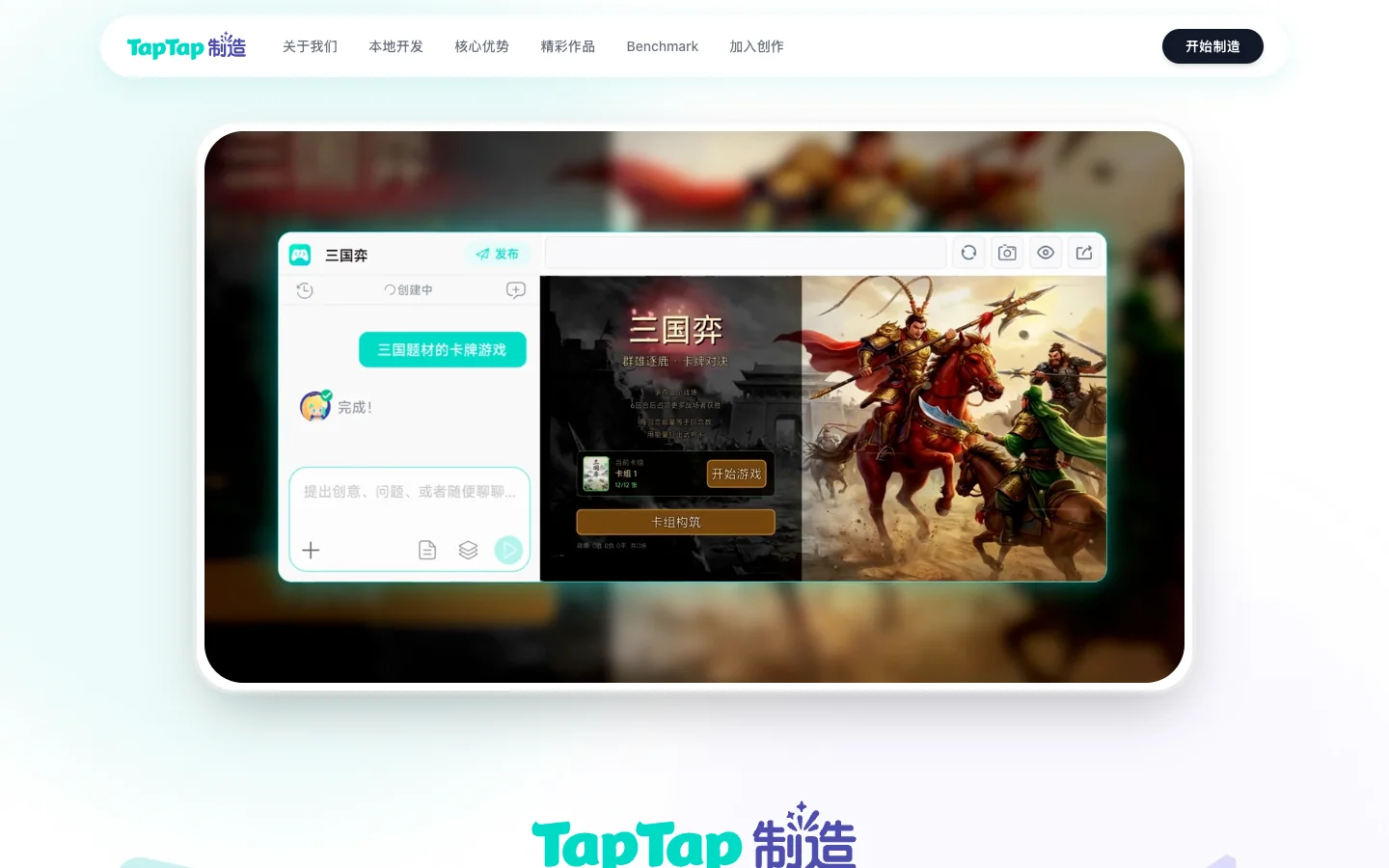
The official website presents local MCP steps covering project initialization, resource generation, debugging and preparation for publishing. This is useful documentation of the intended workflow. Our screenshot records the provider’s public interface demonstration; we have not completed that local sequence or published a game through it.
Connecting an agent to development tools can make iteration more direct, but a connector alone does not answer the ownership question. A creator still needs to know which files are local, which resources are remote, and which services must remain available for the game to run.
Local work should be reproducible
For a small team, the useful outcome is a project another person can open. That means keeping installation instructions, dependencies and configuration alongside the source. A game that only works in one agent’s session is hard to debug or hand over, even if its first preview appeared quickly.
Version control also changes how an AI revision can be assessed. If a request to alter movement unexpectedly changes scoring, a diff and a known working version help isolate the mistake. This is our workflow analysis, not a claim about an automatic safeguard in TapTap Maker.
Publishing needs its own assessment
A development preview is usually operated by someone who already knows the controls. A new player sees a thumbnail, a loading state and a first screen. The creator must make those stages work without personal explanation. Before expanding a project, examine whether its public build can load assets, receive input and restart in a fresh session.
Discovery should be measured separately from technical publication. Impressions tell a creator that a game was shown; starts and continued play reveal more about what happened next. Any recommendation system is easier to evaluate when the platform explains the available metrics and the period they cover.
Questions for a first project
| Stage | Useful evidence |
|---|---|
| Local setup | A clean checkout that runs with documented dependencies |
| AI revision | A readable change that preserves the existing game rules |
| Publishing | A public link checked outside the development session |
| Continued maintenance | A way to retain versions and inspect external service requirements |
TapTap Maker’s local-agent direction is relevant to creators who want to work beyond a single prompt box. Its practical value depends on the complete path from local project to player access. See the tool profile for current documented access and the capabilities we have not tested.