
In this article
Two clips can both be labeled AI games: one shows rules running after an assistant wrote them; another shows a model continually generating what follows a player’s actions. Moving characters alone do not reveal the production workflow, runtime dependencies or deliverable.
A useful starting question is: when a player presses a button, does a generative model still need to participate in that response? This is a question for investigating a system, not something its appearance alone can settle.
Creation assistance leaves runnable rules
In our earlier GDevelop five-coin experiment, an assistant helped construct rules and we obtained an HTML5 build. A fresh session on an independent host completed collection and reset through direction-key input. Requests observed during the first three seconds stayed on that preview host; this limited window did not show model-generation requests.
That makes this particular build a creation-time assistance example, without guaranteeing every GDevelop feature or all subsequent network activity. Our October 20 source-editing experiment separately asks whether the project left behind can be changed.
The main acceptance targets are rules and files: how collisions increment a count, when victory triggers, what reset restores and where source dependencies live. AI may have contributed to code or assets without remaining in the play loop.
Runtime generation incorporates the player’s action
Oasis’s official research description presents a model that generates frames in response to user actions and discusses limitations in precise inventory control, long contexts and consistency. We are referring to that 2024 research account, not a fresh session in today’s online demo.
In this kind of system, walking forward may affect what gets generated next rather than just moving an existing camera. A useful player question is whether an object, route or state remains valid after turning away and returning.
Visual appeal and state reliability are different properties. A short clip can demonstrate local motion without establishing dependable inventory counts, saved quest progress or reproducible challenges. Those are our proposed acceptance questions, not claims that Oasis implements such systems.
Exploring a world is a different deliverable
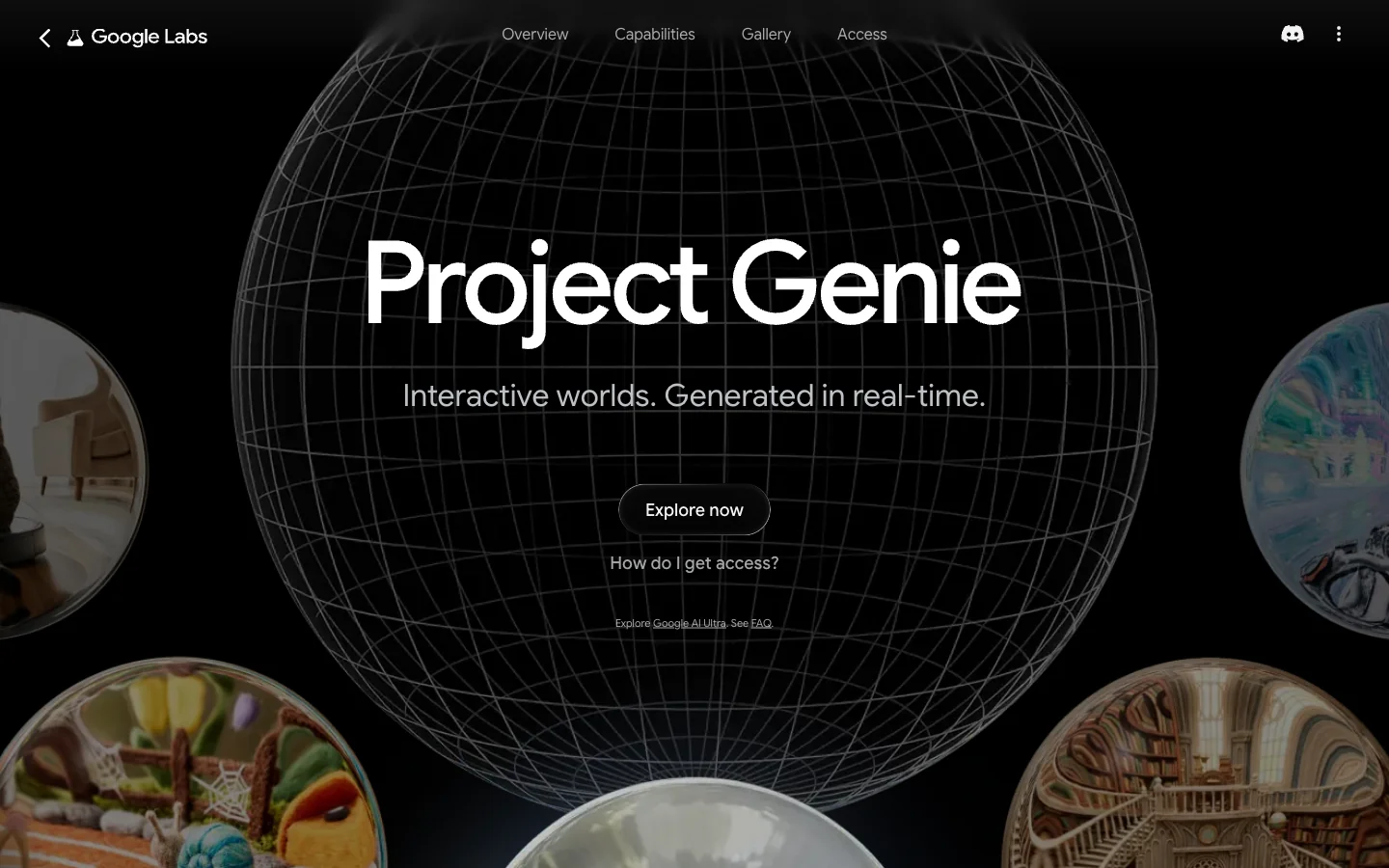
Google’s January 2026 Project Genie announcement describes a research prototype with world creation, exploration, remixing and video downloads, alongside control, latency and generation-duration limitations. Those are historical launch conditions, not newly measured current limits.
The May 19 announcement describes a gradual expansion to eligible adult Google AI Ultra subscribers globally and Street View grounding for US locations. January’s US launch scope should not be repeated as the entire current access policy. Actual eligibility still needs checking in an account; we purchased no subscription and generated no world.
A downloadable exploration video does not establish editable scenes, rule code or an independently hostable build. A creator’s intended deliverable is more informative than comparing promotional clips alone.
Different roles require different checks
| Example | Available basis | Useful acceptance target |
|---|---|---|
| Our independent five-coin build | Actual generation and independent input checks | Rules, reset, exported files and source dependencies |
| Oasis | Official research; no new play session here | Long-horizon consistency, response and reliable state |
| Project Genie | Dated prototype announcements; no generation by us | Account eligibility, exploration limits and output form |
Hybrid designs are possible too. Imagine a conventional game where a model supplies NPC dialogue while movement and inventory remain explicit rules: interrupted dialogue need not stop movement. This hypothetical illustrates subsystem-level questions, not a claim about a particular product.
Added October 22: World Apart supplies a sourced example. Its official launch announcement says exhausted AI dialogue tokens trigger pre-written dialogue while the main story continues; the storefront separately discloses generated assets. This makes subsystem dependency and fallback concrete questions to track. We have not played it or verified the fallback, and this addition provides no new playtest evidence for the earlier examples.
Four questions for the next demonstration
Does an input change state within existing rules or help generate new content? Which results remain consistent when repeated? What files or runnable behavior remain after leaving the generation service? Does the demonstration include failure and recovery, or only a successful fragment?
These questions do not rank one approach above another. Creation assistance can leave a stable but ordinary game; runtime generation can offer unfamiliar yet incomplete interaction. Deciding what you want to play, make and retain is the first step toward judging whether an advance matters to your goal.